
Why Surface Sanitisation Matters in South Africa
Health Risks in High-Traffic Areas
A taxi rank at 7 a.m. in Johannesburg presents dozens of shared surfaces. Handrails, door handles, and ticket machines receive hundreds of touches per hour. Health risks in high-traffic areas are not theoretical; they appear in every cough and handprint. For South Africans, the pattern is clear: more contact points lead to more transmissions. This is why a surface sanitiser south africa is essential! Consider the daily journey:
- Gripping a pole on a moving minibus taxi
- Pressing a lift button in a corporate tower
- Handling a payment keypad at a retail store
Each action transfers microbes. Without regular sanitisation, these organisms persist. I have seen cleaning schedules in shopping centres that miss hourly touches, and the effect shows up in community health data. The answer is simple: apply an effective sanitiser consistently. When you choose a surface sanitiser south africa, confirm it meets local safety standards.
The Role of Sanitisers in Infection Control
Every contact surface in South Africa carries evidence of human passage. Too often, that evidence is microbial. A surface sanitiser South Africa is not a luxury; it is a shield against invisible persistence. Microbes survive on plastics and metals for hours, waiting to pass from one hand to another. Infection control begins here.
The role of sanitisers is broader than simple cleaning. They interrupt a transmission chain that depends on neglect. An effective surface sanitiser South Africa must withstand local conditions, from humid coastal air to dry Highveld winters. Without it, disinfection is only a promise.
These formulations operate in the background of daily life. In South Africa, we touch the same doors, counters, and keypads every day. Sanitisation limits the silent traffic between bodies and surfaces, keeping public spaces habitable.
Climate and Environmental Factors Affecting Disinfection
On a humid Durban afternoon, a surface sanitiser south africa can lose its active ingredients before the label’s contact time elapses. The same product behaves differently in Johannesburg’s dry Highveld air. Climate dictates whether disinfection actually occurs.
Ultraviolet radiation breaks down common sanitiser compounds within hours. Heat accelerates evaporation. Coastal moisture dilutes concentrated formulas on contact. Each environment demands a specific chemical response. Environmental pressures vary by region:
- Humidity reduces chlorine-based active efficacy
- UV exposure fragments quaternary ammonium compounds
- Temperature swings alter viscosity and spray coverage
A formulation that thrives on the coast may fail inland. The reverse holds true as well. South Africa’s regional climates require distinct approaches, not a single universal answer.
Regulatory Compliance and Safety Standards for Disinfectants
SABS Approval and Registration Requirements
When selecting a surface sanitiser south africa, SABS approval acts as the legal benchmark for trust. Certification under SANS 1465 demands that a product demonstrate both efficacy and safety, no exceptions. I have witnessed many labels claim virucidal power, but only certified formulations pass the full audit.
Registration requires a dossier, and here is what it typically contains:
- efficacy data from accredited laboratories
- toxicology reports for human exposure
- stability evidence across temperature variations
Deliberate scrutiny ensures a surface sanitiser does not become another unregulated variable. For surface sanitiser south africa, this process repeats with each new batch. That is the quiet discipline behind every compliant bottle.
Chemical Safety and Handling Guidelines
One misstep in dilution can render a batch of surface sanitiser south africa either useless or hazardous. The Hazardous Chemical Agents Regulations under the Occupational Health and Safety Act set the legal ground rules. Every container must carry GHS labelling, and the Safety Data Sheet must be accessible to every worker who touches the product. Compliance requires documentation and physical discipline.
Handling guidelines for surface sanitiser south africa demand more than a glance at the label. Proper storage means keeping concentrates below 25 degrees Celsius, away from direct sunlight, and segregated from oxidising agents. Workers need chemically resistant gloves and eye protection, especially when preparing diluted solutions. Ventilation matters, because quaternary ammonium compounds release fumes when mixed incorrectly.
- Use dedicated measuring equipment to prevent cross contamination
- Never return unused diluted product to the original container
- Check the expiry date before every shift, not just on delivery
These practices turn chemical safety into a daily discipline that protects people and surfaces alike.
Eco-Friendly and Green Certifications
Regulatory compliance for eco-friendly disinfectants in South Africa is not a simple checkbox exercise. The transition toward green chemistry has introduced a layer of verification that many procurement teams underestimate. When a supplier claims their surface sanitiser south africa product is biodegradable or non-toxic, that claim needs third party validation, not just a marketing brochure. The South African Bureau of Standards and the Department of Employment and Labour look for evidence of efficacy alongside environmental safety, and the two are not always aligned.
Green certifications carry weight when they demonstrate a measurable reduction in environmental impact. Look for certification bodies that audit manufacturing processes, not merely the final formulation. A surface sanitiser south africa product may carry an eco label while still containing solvents that accumulate in waterways. Certifications such as EU Ecolabel, Green Seal, or the South African Green Building Council’s materials credits require documentation of ingredient sourcing, packaging, and disposal pathways. These credentials matter in tender processes, particularly for municipal contracts and large facility management companies.
- Verify that certifications are current and issued by an accredited body
- Cross check the certificate number directly with the issuer
- Confirm that the certification covers the specific product line, not just the brand
- Request the full ingredient list to assess hidden environmental trade offs
Compliance also demands attention to the interplay between disinfection standards and sustainability targets. A product that meets SANS 1853 requirements for germicidal activity does not automatically satisfy green procurement policies. The opposite also holds true. An eco-friendly formulation might pass biodegradability tests yet fail to achieve the log reduction required for hospital grade disinfection. This tension forces buyers to evaluate their actual risk profile rather than defaulting to the most sustainable option. For many facilities, the correct answer lies in a segmented approach, using heavier duty chemistries in clinical areas and greener alternatives in public spaces.
The labelling of eco-friendly surface sanitiser south africa products must still comply with the Hazardous Chemical Agents Regulations, even if the formulation uses plant based ingredients. Essential oils and organic acids can cause sensitisation or skin irritation at certain concentrations. Certification does not exempt a manufacturer from GHS pictograms or safety data sheets. In my experience, the best performing tenders combine rigorous compliance documentation with measurable sustainability metrics, such as reduced volatile organic compound content or lower packaging weight. That combination signals a supplier who understands the full operating environment, from the storage room to the boardroom.
Storage and Disposal Regulations
Storage and disposal regulations for surface sanitiser south africa often receive less attention than efficacy testing, yet they carry serious legal weight. The Occupational Health and Safety Act requires that disinfectants be stored in clearly marked containers, away from incompatible substances, and in areas with adequate ventilation.
- Dispose of expired or contaminated sanitiser through a registered hazardous waste contractor.
- Never pour concentrated chemicals into municipal drains without checking local bylaws.
- Keep safety data sheets accessible to staff who handle spills or disposal.
My experience on site audits suggests that many compliance failures originate in the disposal stage. A surface sanitiser south africa product might meet all registration requirements, but if the facility lacks a documented waste stream, the liability shifts to the buyer. Municipal wastewater treatment plants also impose limits on disinfectant residues.
Key Ingredients and Sanitising Efficacy
Alcohol-Based vs. Non-Alcohol Solutions
One square centimetre of a shopping trolley handle holds more bacteria than a toilet seat. The active chemistry in your surface sanitiser south africa decides survival. Alcohol based solutions, relying on ethanol or isopropanol, denature proteins within seconds. However, their efficacy weakens on greasy films, and rapid evaporation cuts contact time. Non alcohol solutions, such as benzalkonium chloride, maintain a longer dwell period.
- Ethanol at 60 to 80 percent concentration
- Isopropanol blended with surfactants
- Quaternary ammonium compounds for residual action
- Hydrogen peroxide for oxidising pathogens
Alcohol formulas win on speed, yet they lose potency against certain viruses when organic matter is present. Non alcohol options provide lasting disinfection but need precise dosing to avoid residue. Choose based on your surface type and available contact time!
Quaternary Ammonium Compounds (Quats)
The quiet power of quaternary ammonium compounds lies in their persistence. Unlike alcohol’s flash of action, these charged molecules cling to surfaces, disrupting microbial membranes over minutes. In my experience testing commercial spaces, a surface sanitiser south africa built on quats excels where organic load threatens weaker actives. Their cationic structure attracts negatively charged bacteria and enveloped viruses, making them formidable against everyday grime. Consider the practical range:
- Benzalkonium chloride for broad spectrum use
- Didecyl dimethyl ammonium chloride for biofilm penetration
- Octyl decyl dimethyl ammonium chloride for hard water tolerance
Each variant demands specific dilution. Overuse leaves residue, while underdosing invites resistance. Quats reward precision, offering residual protection that alcohol cannot match on high touch points. That staying power changes your disinfection rhythm entirely.
Contact Time and Pathogen Elimination
Contact time determines whether a sanitiser actually works. Most failures I observe in facilities stem not from weak chemistry, but from impatience. A surface sanitiser south africa may list impressive kill rates, yet those percentages only hold when the active ingredient dwells long enough to dismantle the pathogen’s structure.
Hydrogen peroxide formulations rely on free radicals that oxidise cellular components within thirty seconds to two minutes. Hypochlorous acid acts faster, but degrades quickly under organic load. Peracetic acid offers robust elimination, though it demands careful handling. Each ingredient dictates its own rhythm.
- Hydrogen peroxide: oxidises rapidly, works in 30 to 120 seconds
- Hypochlorous acid: quick action, sensitive to dirt
- Peracetic acid: broad spectrum, longer contact required
The practical consequence is simple. Read the label, measure the time, and respect the chemistry. Pathogen elimination is not magic; it is mathematics. Choose a surface sanitiser south africa that fits your workflow.
Effectiveness Against Common South African Outbreaks
South Africa’s high burden of tuberculosis, alongside recurrent listeriosis outbreaks, demands a sanitiser that matches the local pathogen ecology. Common ingredients differ widely in their efficacy. Hypochlorous acid, despite its speed, loses potency when organic matter is present. Stabilised chlorine dioxide retains activity across a wide pH range, making it suitable for crèches and clinics.
Ingredient actions against local threats:
- Chlorine dioxide destroys Listeria monocytogenes within sixty seconds.
- Accelerated hydrogen peroxide inactivates Mycobacterium tuberculosis in laboratory tests.
- Peracetic acid is effective against hepatitis A and norovirus.
These pathogens persist on surfaces for hours. The duration of efficacy varies with formulation and temperature. A surface sanitiser south africa with the right active ingredient will reduce transmission, but only if the concentration remains stable throughout the application.
Surface Compatibility and Material Safety
Most facilities choose a surface sanitiser south africa by scent or by price. Very few choose it by substrate compatibility. That is how epoxy floors get stripped and rubber gaskets turn brittle.
Aggressive oxidisers such as peracetic acid annihilate pathogens quickly, yet they also etch aluminium and degrade neoprene seals. Stabilised chlorine dioxide is kinder to stainless steel but can cloud polycarbonate surfaces over repeated use.
Three factors determine whether a sanitiser damages what it cleans:
- The active ingredient’s redox potential
- The solvent load and pH of the formulation
- The substrate’s porosity and chemical resistance
The active ingredient’s oxidation potential determines whether your surface sanitiser south africa protects or destroys. I have watched a perfectly adequate sanitiser ruin a crèche’s vinyl flooring within weeks because nobody checked the solvent load.
Selecting the Right Product for Different Surfaces
Hard Surfaces vs. Soft Surfaces
In one telling audit, the average office carpet held four times the bacterial load of a lift button. That disparity explains why choosing a surface sanitiser south africa requires a material specific approach.
Hard surfaces, from chrome taps to laminate counters, tolerate alcohol based formulas with quick drying times. Soft surfaces, however, such as fabric chairs and acoustic panels, demand gentler chemistry or they suffer discolouration and lingering odours.
- Consider the finish: polished stone reacts poorly to acidic sanitisers.
- Consider the weave: dense textiles trap moisture and need lower concentrations.
I always advise clients to test a small patch first. They rarely do, which is why so many boardrooms smell faintly of regret. The best surface sanitiser south africa performs admirably on both hardness levels without sacrificing either efficacy or appearance.
Food Preparation and Kitchen Areas
In food preparation zones, the margin for error is small. A surface sanitiser south africa must break through grease, protein films, and the constant movement of hands and utensils. Dilution rates vary wildly between brands, and some leave residues that alter the taste of the next meal.
- Stainless steel tolerates aggressive chemistry.
- Cutting boards and sealed timber demand gentler compounds.
- Cold water weakens many sanitisers before they touch a surface.
I have watched kitchens ruin equipment by pairing the wrong product with the wrong material. Polished chrome reacts poorly to acidic formulas, and porous surfaces absorb what they should shed. The dependable surface sanitiser south africa respects both the surface and the food that follows.
Healthcare Facilities and Clinics
In a clinic, the wrong product can turn a minor oversight into a costly repair. I have seen a nurse reach for a citrus degreaser on a polycarbonate shield, only to watch it cloud within minutes. The selection process demands a deliberate audit of each room, not a single solution for the entire facility.
Consider the surfaces in front of you: the metal tray, the vinyl mattress, the plastic housing of a monitor. Each responds differently. A surface sanitiser south africa that works on stainless steel may etch a glossy instrument. The pH and solvent profile need to match the substrate, or you inherit a problem.
- Choose pH-neutral formulas for polycarbonate and acrylic.
- Avoid fragrances in paediatrics and respiratory wards.
- Check contact time against real room turnover.
The best approach is to test one product on a discreet patch before committing. That quiet step preserves machinery, budgets, and patient trust.
Industrial and Commercial Spaces
In industrial corridors, floor grease and electronic touchscreens rarely respond to the same chemical. I once watched a warehouse team ruin an entire HDPE pallet line with a bleach heavy formula, a costly error in substrate mismatch. A surface sanitiser south africa must align with material stress, not with habit.
Consider the specific demands:
- Use alcohol free quats on painted steel and powder coated frames.
- Select solvent blends only for unpainted, high impact polymers.
Rubber gaskets, polycarbonate machine guards, and aluminium housings each react differently. Testing on a hidden section prevents visual damage and downtime. The right product preserves both throughput and warranty.
Proper Application Techniques for Maximum Protection
Spraying vs. Wiping Methods
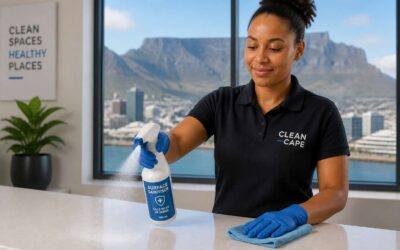
Spraying a surface sanitiser south africa might feel thorough, yet the mist often beads on slick finishes, leaving pockets untouched. Wiping, by contrast, presses the liquid into every pore and grain, forcing contact with microbial life.
- Spray evenly from a distance of 20 cm.
- Wipe immediately with a dampened cloth.
- Allow the residual film to air dry.
I have seen operators rely on a quick spritz, but maximum protection demands deliberate motion. Choose a clean microfiber cloth and work in overlapping strokes to dislodge soils that spray alone merely displaces.
Dilution and Mixing Instructions
I have watched teams assume that a stronger mix means better protection. The opposite is true. Overdosing a surface sanitiser south africa can leave a sticky residue that traps pathogens and dulls finishes. Underdosing, meanwhile, gives microbes a fighting chance. The label’s dilution ratio is the result of laboratory testing, not guesswork.
- Mix only what you will use within one shift.
- Label every spray bottle with the dilution date.
- Never top off a half-empty bottle with fresh concentrate.
Use a clean measuring cup for every batch of solution. Pour the concentrate first, then add water at room temperature. Hot water breaks down quaternary ammonium compounds. Cold water slows their activity. Test the mixture with a dilution strip if your supplier provides them, especially when using a surface sanitiser south africa in hard water regions like Gauteng.
Ensuring Adequate Coverage and Dwell Time
Spraying a surface sanitiser south africa and wiping it away immediately is the most common mistake I see in the field. The product needs to sit undisturbed for the labelled dwell time. This is not a suggestion. It is the time required for the active chemistry to dismantle the pathogen’s cell wall.
Coverage is equally critical. A fine mist that beads and leaves dry patches is ineffective. The surface should glisten with a visible film. Work in small sections, roughly one square metre at a time, so the liquid does not evaporate before the dwell time elapses.
- Hold the nozzle 15 to 20 centimetres from the surface
- Apply in a slow, overlapping pattern
- Let the film remain wet for the full contact period
After the dwell time, wipe the surface with a clean microfibre cloth. Reapply in high-touch zones as soon as they become contaminated again. A surface sanitiser south africa only protects while the film remains intact, so reapplying must become routine, not an afterthought.
Personal Protective Equipment (PPE) Considerations
A single breath of aerosolised quat can irritate airways before you even touch the surface. In my years assessing hygiene protocols across South African facilities, I have watched workers spray a surface sanitiser south africa without a single glove. That is a mistake!
PPE is not optional. The nozzle creates a fine mist that settles on skin and clothing. Gloves prevent contact dermatitis. Safety goggles stop splashback from reaching the eyes. A respirator, not a cloth mask, filters the volatile compounds released during spraying.
- Nitrile gloves rated for chemical exposure
- Full seal goggles with anti-fog coating
- Half mask respirator with organic vapour cartridges
Technique matters too. Angle the nozzle downward, never upward, to reduce airborne particles. Move in a steady rhythm rather than quick bursts. The goal is a controlled wetting, not a cloud. Applying any surface sanitiser south africa without PPE is a compliance risk.
Market Overview and Supplier Landscape in South Africa
Leading Local Manufacturers and Brands
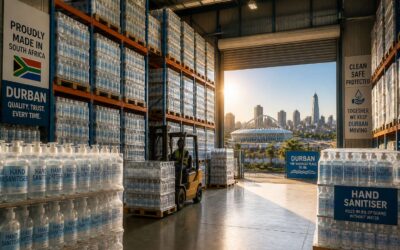
The market for surface sanitiser south africa products has matured quickly. Importers once dominated this space, but local production now accounts for a growing share. That shift favours businesses needing stock on short notice, especially in Gauteng and the coastal provinces.
A handful of manufacturers carry real weight in this supplier landscape. They run SANS and SABS certified lines and produce hospital grade formulations alongside industrial concentrates. I have noticed a real documentation discipline across these facilities. Among the leading local manufacturers and brands, a few names keep appearing in procurement discussions:
- Ayrton Drugs, a Cape Town based pharmaceutical house with a respected sanitising range.
- NCP Alcohols, which supplies ethanol and isopropyl alcohol to local blenders.
- Private label contract packers filling orders for hotels and retail chains.
Choosing the right surface sanitiser south africa supplier involves more than skimming a price guide. Buyers review batch traceability, formulation stability, and delivery turnaround. A local manufacturer who treats certification as a baseline keeps supply chains short.
Buying in Bulk vs. Retail Purchases
The pricing conversation around surface sanitiser south africa purchases tends to split along volume lines. Bulk buyers, warehouses, and facility managers negotiate per litre rates that retail shoppers never see. Retail buyers pay a premium for convenience, smaller packaging, and the freedom to switch products without burning through stock.
Supplier landscape matters here. Buying directly from a manufacturer cuts out distributor margins, but requires minimum order quantities and longer lead times. Distributors offer variety and faster delivery for smaller orders. Consider these factors when deciding:
- Your monthly consumption volume
- Available storage space and shelf life constraints
- Delivery lead times versus emergency needs
Cost Considerations and Value for Money
The market for surface sanitiser south africa has settled into a familiar rhythm. Suppliers range from multinational chemical giants to local entrepreneurs mixing batches in Johannesburg warehouses. The landscape rewards buyers who understand that price per litre hides a multitude of sins, including poor dilution ratios and questionable compliance claims.
Cost considerations extend beyond the sticker price. Value for money means factoring in logistics, shelf life, and the hidden cost of a product that leaves a sticky residue. A cheaper sanitiser that requires twice the contact time is not cheaper.
Consider what you are actually paying for:
- Transport costs from Gauteng to coastal provinces add up quickly.
- Smaller suppliers may offer better rates but limited stock continuity.
- Bulk pricing often excludes delivery, so read the fine print.
The supplier landscape remains fragmented, which works in your favour. Negotiation is possible and expected.

0 Comments